Incremental RTS Army Builds & Archetypes
Pick a primary path, fund its factories, and keep early units relevant with late synergies.
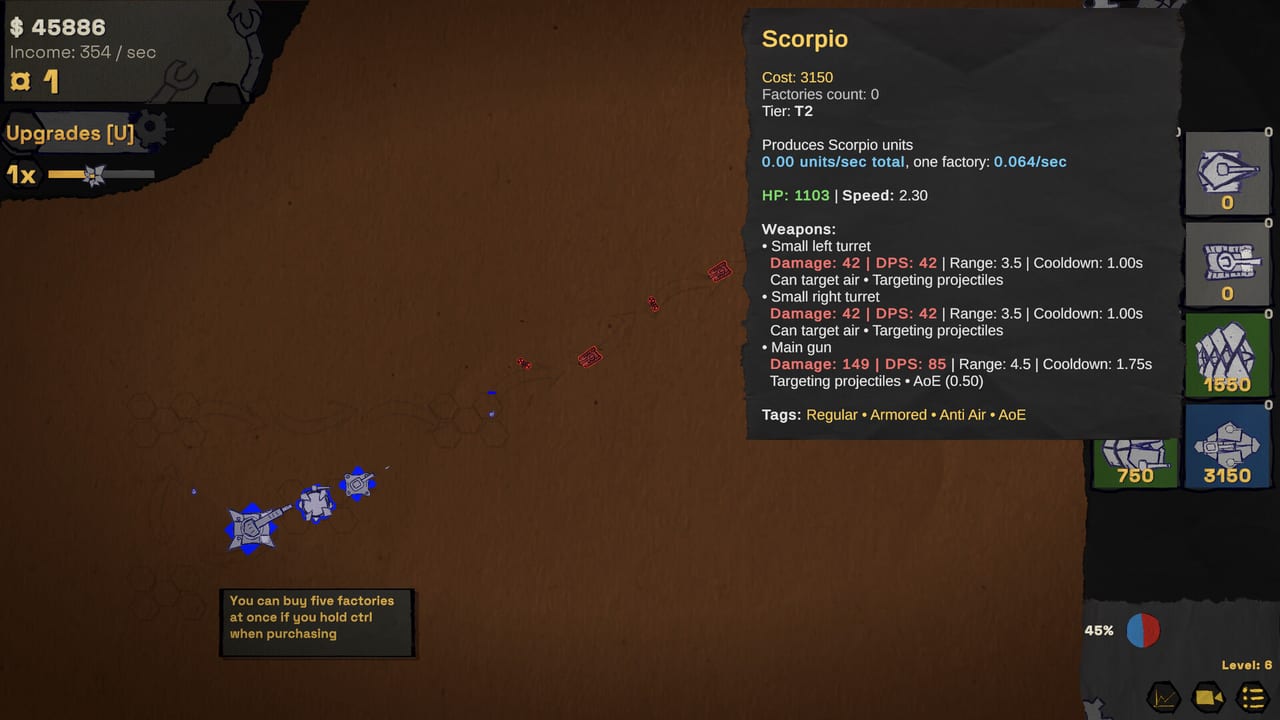
Incremental RTS sells a simple fantasy: build factories, pick upgrades, and flood the map—no micro required. The hard part is choosing an army identity that still works when enemy surges, walls, and waypoint defenses escalate. This guide maps the main archetypes—swarms, artillery, snipers, tanks, mega units, and mixed cores—and shows how units like Ants, Mosquito, Thistle / Thorn / Reed, Crab, Hummingbird, Bamboo, Big Bertha / Monolith, Swallow, and super-heavy tanks fit together.
Steam’s own pitch stresses that early units never fully retire: later abilities and synergies can keep “trash” factories online. Your build is therefore a path with support, not a one-time tech switch that deletes everything you unlocked in hour one.
Build principles before the paths
- One primary, one support. Five half-funded factories lose to two focused lines.
- Screen before glass. Artillery and snipers need bodies—Mosquito, Ants, or soak—so they live long enough to shoot.
- Read the stats screen. Damage dealt versus absorbed tells you whether your swarm is killing or your tanks are only dying slowly.
- Scout the enemy base. After the overview upgrade, double-click the enemy base before you invent a counter-factory you do not need.
- Time the next factory. Use the Factory Calculator so a mega tank purchase does not stall your entire income curve.
New to panels and hotkeys? Skim Controls, How to Play, and Getting Started first.
Swarm path
Core ideas: occupancy, replaceability, volume. Signature units: Mosquito, Ants, early flyers, later hummingbird pressure.
Swarms win by being present. Mosquito’s flying frontline and Ants’ production density create a carpet the enemy must constantly clear. Upgrades that multiply production, movement, or evasion scale this path harder than raw single-unit HP.
Strengths: Fast answers to empty lanes; forgiving when units die; excellent at teaching the Mosquito lesson from Mosquito vs Woodlouse.
Weaknesses: Can bounce off armored bases and long-range defenses without an artillery or sniper partner.
Upgrade focus: Production rate, movement, cheap damage multipliers, anything that keeps early factories relevant.
When to pivot: Add Bamboo or plant snipers when stats show high deaths and low base damage.
Artillery path
Core ideas: reach, base pressure, surge deletion from behind a screen. Signature units: Bamboo, Big Bertha / Monolith, other long guns.
Artillery is the “melt the enemy” fantasy. Big Bertha / Monolith-style weapons want range and time on target; Bamboo fills mid-long niches. Developer notes even called out range bugs and tuning on Bertha/Monolith during itch development—always verify live range after patches.
Strengths: Punishes static defenses and base walls; shines when your screen holds.
Weaknesses: Slow, expensive, miserable if unprotected.
Upgrade focus: Range, damage, fire rate, and economy nodes that fund the next gun factory.
Support: Mosquito or Ant screen in front; optional Woodlouse/Crab soak once travel time is solved.
Sniper & plant path
Core ideas: precision, lane control, stacked DPS with survivability. Signature units: Thistle, Thorn, Reed, related plant lines.
Plant and sniper archetypes reward patience. They often stack well and punish priority targets if a cheap screen exists. Community chatter has long contrasted sniper survivability with earlier ranged unlocks—your job is to fund the line that still shows damage after mid-game modifiers spike.
Strengths: Efficient damage once positioned; strong with apex-style upgrades that clarify tree categories.
Weaknesses: Needs a frontline; struggles if you starve production for pure glass.
Pair with: Ants or Mosquito for bodies; artillery when you need base delete buttons.
Tank & soak path
Core ideas: absorb, push, survive the clash. Signature units: Woodlouse, Crab, heavy ground, later super heavies.
Tanks look obvious and fail for subtle reasons. Woodlouse taught the community that HP without arrival is a trap. Crab and later heavies work when lanes are short enough—or when speed/production upgrades shrink the walk—and when artillery behind them converts absorb into progress.
Strengths: High damage-absorbed numbers; stabilizes base fights with walls.
Weaknesses: Travel tax; poor into free air if you never buy anti-air or flying screens.
Rule: Never make soak your only early factory plan. Read the Mosquito page, then add tanks as the second verb.
Mega & super-heavy path
Core ideas: breakthrough, late spikes, map-defining bodies. Signature units: mega tanks and other super-heavy unlocks teased on high levels during itch sneak peeks.
Mega units are win-more tools if your economy and screen already function. They are lose-faster tools if you bankrupt income and leave lanes empty for two minutes. Always run the factory wait-time formula before the click.
Strengths: Cracks stalled mid-games; satisfying payoff for deep upgrade investment.
Weaknesses: Cost, slow pivots, vulnerability while you wait.
Economy link: Economy Guide and Upgrades Guide matter more here than on swarm opens.
Dual-range flyers: Swallow & friends
Swallow stands out as a full-game flying rocket launcher with dual-range attacks—a flexible pressure piece rather than a pure early mosquito substitute. Hummingbird fills faster flying niches. Together they extend the air story from early screens into late map control.
Fund flyers when:
- Enemy ground walls stall your ants.
- Stats show your artillery dying before volleys complete.
- You need a mobile answer that still scales with the long upgrade tree.
Keep some ground production anyway. Pure air can struggle when maps introduce mixed defenses and surge patterns that punish one dimension.
Mixed builds that actually work
| Mix | Front | Core | Finisher | Notes |
|---|---|---|---|---|
| Swarm + guns | Mosquito / Ants | Bamboo | Bertha / Monolith | Classic screen-and-melt |
| Plants + soak | Ants | Thistle / Thorn / Reed | Woodlouse / Crab | Precision with absorb |
| Air control | Mosquito | Hummingbird | Swallow | Dual-range late pressure |
| Balanced ladder | Mosquito | Plants + Bamboo | Mega tank | Flexible for unknown enemy comps |
Pick the mix that matches scout info, not the mix that looks coolest in the factory panel. After deaths, use Death and Progression so the next attempt spends meta progression on the bottleneck you actually hit.
Mid-run decision loop
- Watch one full clash without buying panic factories.
- Open statistics: who deals, who absorbs, who is absent.
- Scout the enemy base composition.
- Buy the missing role, not a random new unit type.
- Recalculate the next factory wait with current income.
- Only then open upgrades (U) for multipliers that amplify the role you just chose—multi-buy with Ctrl/Cmd when appropriate.
Common mistakes
- Retiring Ants or Mosquito the moment a mega unlocks—Steam’s design expects early lines to stay relevant.
- Funding Big Bertha with zero screen.
- Treating Woodlouse HP as an early win condition.
- Ignoring interest versus immediate factory needs (see economy guides).
- Never zooming or panning to see far-lane collapses—use wheel zoom and drag pan from the controls page.
Where to go next
Return to the Tier List Hub for ranking context, deepen the early duel on Mosquito vs Woodlouse, and keep Guides open for economy and upgrade order. Track patch themes on Updates and bookmark official channels on the Links Hub.
Army building in Incremental RTS is less about hotkey dances and more about honest role coverage. Choose a primary path, protect it, measure it, and let the auto-battle chaos do the clicking you used to waste in classic RTS games.
Frequently Asked Questions
Quick answers to the most common questions.
What is the best army build in Incremental RTS?
There is no single best build. Swarm-plus-artillery is a reliable default; adjust with snipers, tanks, Swallow, or megas after you scout the enemy base and read the stats screen.
Should I stop producing early units in the late game?
Usually no. Early units stay relevant through later synergies. Retire a line only when stats show it contributes nothing after upgrades.
When should I buy mega tanks?
After your screen and economy already function. Estimate wait time with the factory formula so the purchase does not stall production.
What makes Swallow special?
Swallow is a full-game flying rocket launcher with dual-range attacks, bridging early air screens and late map pressure.