How to Play Incremental RTS
The semi-idle RTS loop: factories, upgrades, auto-battles, and scaling pressure.
This page explains the core loop of Incremental RTS so every other guide has a shared vocabulary. If you have not launched yet, skim Getting Started first. If costs already feel hostile, jump ahead to the Economy Guide after you finish the loop section here.
Incremental RTS sits between idle games and classic real-time strategy. Dyrkabes Games designed it so you never micromanage soldiers. You purchase factories, research upgrades, and let production pour units onto a hand-drawn paper battlefield. The skill ceiling is reading economy, upgrade timing, and army composition — not APM.
The loop in one paragraph
Earn resources → spend on factories (right panel) and upgrades (U / left button) → units spawn and auto-path into fights → you capture ground, survive surges, and climb levels → prices rise because each building inflates all building costs → you purge or die and rebuild with permanent upgrade progress → repeat with stronger tools.
That sentence is the whole game. Everything else is detail.
Phase 1 — Production without babysitting
Factories are your spawners. You do not queue individual units with a dozen hotkeys the way you might in a traditional RTS. You decide which production lines exist, then trust the auto-battler. Hold Ctrl or Cmd to multi-buy when you intentionally want volume. Use mouse wheel zoom and drag pan to keep the front readable as swarms thicken.
Because each building raises every building’s price, “cheap now” can mean “expensive forever until purge.” Ask whether a purchase advances the current fight or only satisfies a completionist itch. Resource Sunflowers produce income; they replaced Briars and should not be mistaken for another frontline combat factory. Details and the saving-time formula live in the Economy Guide.
Phase 2 — Upgrades as the long game
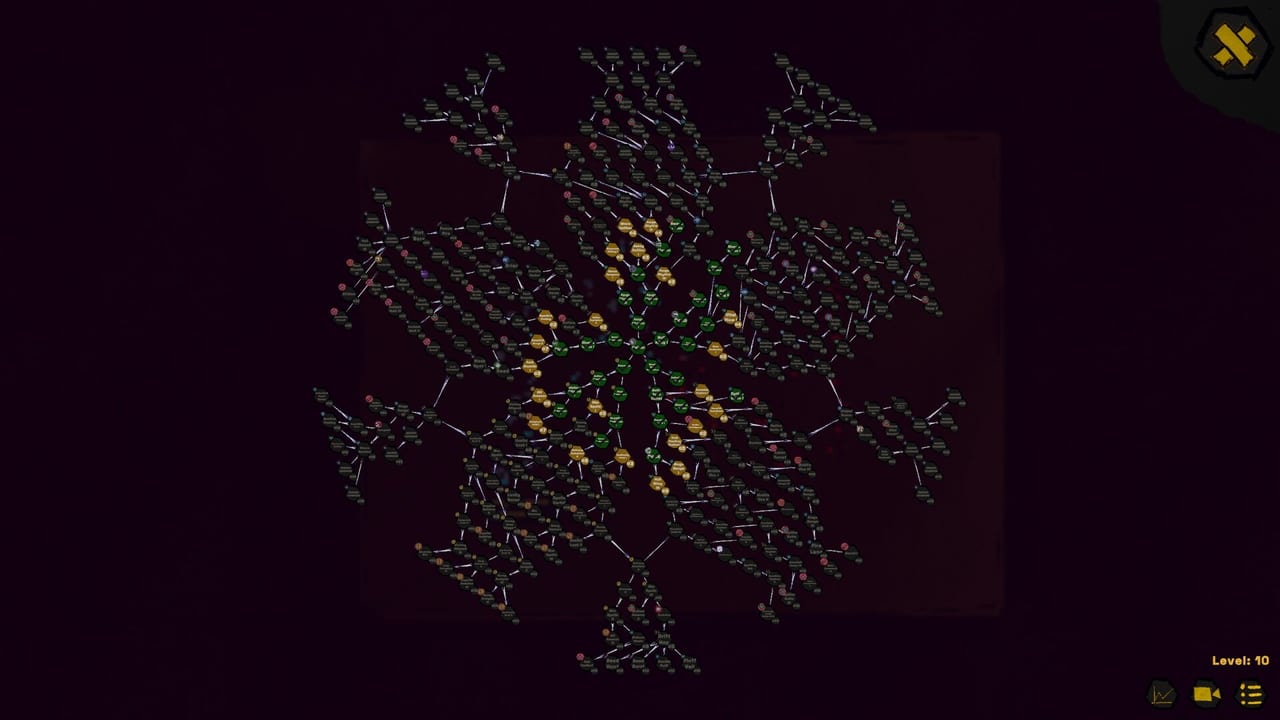
Press U to open the tree. The full game advertises 300+ upgrades, reworked into clearer categories, with Apex nodes that stand out as stronger picks, keyword search, and even weak repeatable sink upgrades that can be bought indefinitely. Early coin rewards and compound interest solve different problems: coins pay when you still have bases left to crack; interest needs time to matter. A restart that skips early levels changes which coin opportunities still exist — plan with the run you are actually on. Expand with the Upgrades Guide.
Phase 3 — Auto-battle chaos
Units fight alone. Your camera work is informational: spot where a wave stalls, which factory type is feeding the wrong fight, and whether a base assault needs more artillery, swarm density, or a tanky front. Community and prototype talk often mentions:
- Mosquito — fast air that looked strong in testing.
- Woodlouse — high HP but slow / underperformed in some reports.
- Broader roster themes — swarms, artillery, snipers, tanks, mega units.
- Swallow — full-game flying rocket launcher.
Use those names as orientation, then validate with your statistics screen (damage dealt and absorbed) and the Tier List Hub, especially Mosquito vs Woodlouse and Army Builds.
Maps can include turrets on waypoints, lasers, block posts, and bases with walls that change how assault waves reverse. You still do not click-move every unit; you change the composition and economy that feeds the fight.
Phase 4 — Pressure, death, and intentional resets
Enemy surges and tougher levels eventually break a run. Death is not a soft failure state you must avoid at all costs. On death: upgrades and war points persist, factories are lost, and you return to an earlier level. The empty factory board is a feature — rebuild using newly unlocked factory types. Separate that from purge, which addresses the shared price spiral during a living run. Full rules and Level 24+ warnings are on Death and Progression.
Phase 5 — Scale and specialize
As unlocks pile up, the loop stays the same but decisions get sharper:
- Income setup (Sunflowers and economy upgrades) before vanity armies.
- Shared-cost awareness before multi-buy spam.
- Upgrade pathing that matches remaining levels, not a guide written for a different restart point.
- Army identity — swarm flood, artillery poke, air pressure, or mega-unit spikes — refined on the tier-list pages.
- Platform hygiene — Steam vs itch size differences, Safari save issues, desktop preferred over mobile.
How to practice the loop
Run a deliberate “lab session”:
- Start a run with only two factory types and refuse all others for ten minutes.
- Open upgrades once, buy a small planned set, close the panel, and watch combat for five minutes without spending.
- Note when shared prices make the next key factory feel unreachable — that is your cue to study purge timing, not to panic-buy junk.
- Die once, rebuild, and compare how much faster the second opener feels with persisted upgrades.
This practice beats watching numbers climb while confused. Pair it with Controls and the Factory Calculator when you want numeric estimates.
How this page connects outward
- New player checklist → Getting Started
- Cost curve, purge, Sunflowers → Economy Guide
- Coins, interest, Apex, search → Upgrades Guide
- Persistence and platforms → Death and Progression
- Unit value → Tier List
- Patch and storefront context → Updates, Links, Wiki
Mindset summary
Incremental RTS is won in the buy menu, not the unit select box. If you catch yourself trying to micro a Mosquito flock, zoom out and change production or research instead. If the battlefield looks lost, ask whether economy, upgrade timing, or composition failed — then fix that layer on the next rebuild. The paper aesthetic and auto-battle chaos are the fantasy; the discipline is knowing when not to buy.
Return to the Guides Hub whenever you need the full index. Once the loop feels automatic, you are ready for economy and upgrade deep dives.
Frequently Asked Questions
Quick answers to the most common questions.
What is the core loop of Incremental RTS?
Buy factories and upgrades, let units auto-battle, manage shared building costs, then purge or die and rebuild with permanent upgrade progress.
Can I control individual units?
No. The design is zero micromanagement. You influence fights through factories, upgrades, and composition.
When should I read the economy guide versus this page?
Read this page until the loop is clear. Open the Economy Guide as soon as shared factory prices start blocking your plans.
Are Sunflowers combat units?
No. Sunflowers are resource producers that replaced Briars. Build them for income, not as a frontline replacement.
Where do I learn unit rankings after understanding the loop?
Use the Tier List Hub, Mosquito vs Woodlouse, and Army Builds pages.